
The short answer
You likely need a new AC if repairs keep piling up, rooms won't cool evenly, or your home has no cooling at all. OzoneLine HVAC Services assesses your home's heat gain, ducts, and electrical before recommending central AC, a heat pump, or a ductless system, and explains what drives the cost.
Many San Mateo homes were built without central air, and many that have it run older systems that struggle on warmer days. Whether you're adding cooling for the first time or replacing a worn-out unit, OzoneLine HVAC Services helps you choose a system that fits your house, your ductwork, and how you actually live in it. Here's what to watch for, what we check, and how the process works.
Signs It's Time for a New AC
Not every problem means replacement. But some patterns suggest your system is near the end of its useful life, or that your home never had the right setup to begin with.
- Repairs are getting more frequent, or the same part keeps failing
- Some rooms stay warm while others cool fine
- The system runs a long time without reaching the set temperature
- Energy bills have crept up without a change in how you use the system
- The unit uses an older refrigerant that's harder to service
- You have no cooling and want it before the next warm spell
- Your furnace is also aging and you're considering one system for both heating and cooling
What We Check Before Recommending a System
A good installation starts with an accurate picture of the house. Sizing by square footage alone often leads to a unit that's too large, which cycles on and off and leaves rooms clammy, or too small, which runs constantly and still falls behind.
- Heat gain: window size and direction, insulation, attic conditions, and ceiling height
- Ductwork: condition, leaks, sizing, and whether it can handle the airflow a new system needs
- Electrical panel capacity and the circuit the outdoor unit will use
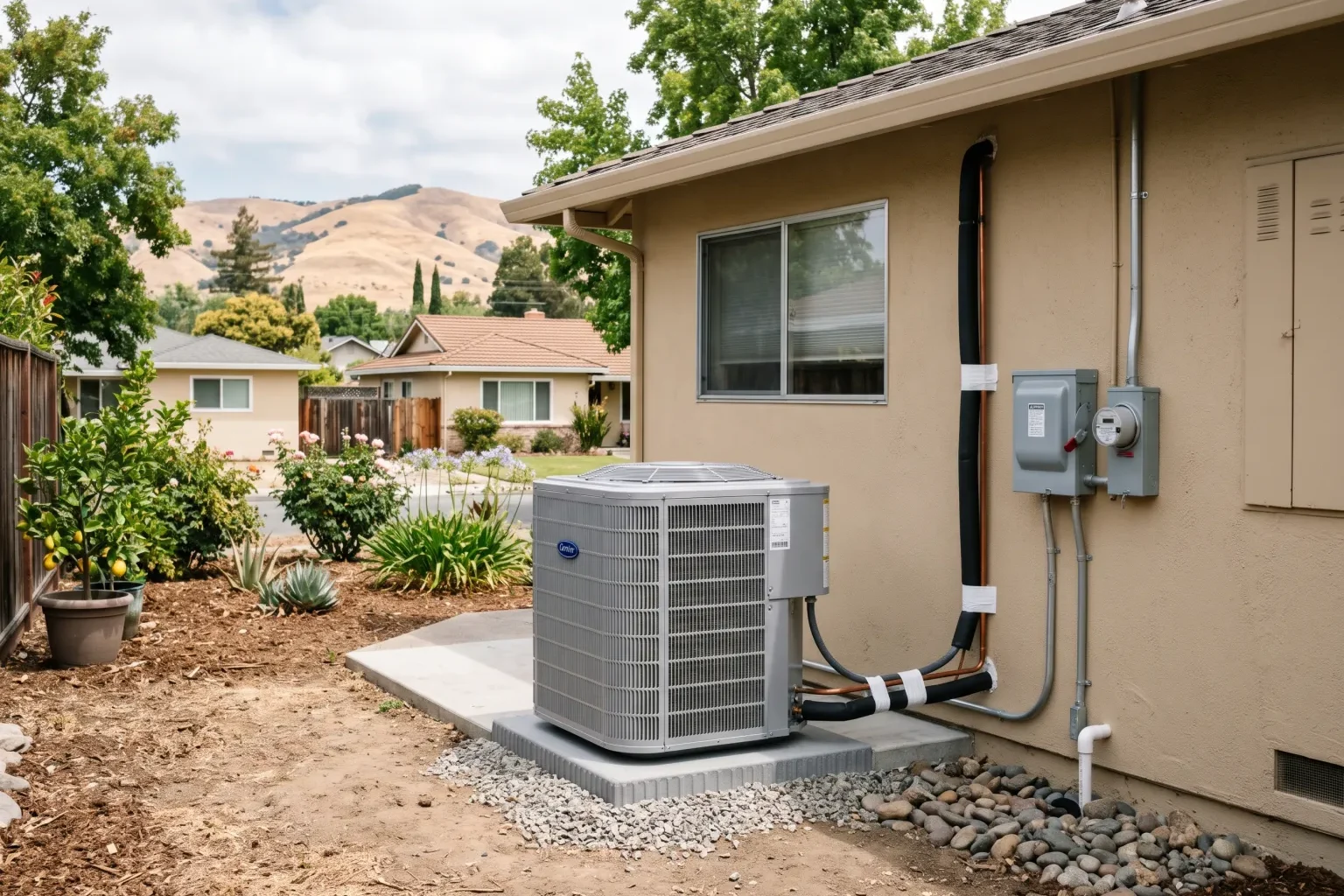
- Outdoor unit placement, including clearance, noise, and distance to neighbors
- Your existing furnace or air handler and whether it's compatible
- Thermostat and controls
Repair, Replace, or Switch to a Heat Pump
If your current AC can be fixed reliably, we'll tell you. A failed capacitor or a refrigerant leak in an accessible spot doesn't automatically mean a new system. When the compressor fails on an older unit, or repairs keep stacking up, replacement usually makes more sense.
When you do replace, there are generally three paths: a new central AC paired with your existing furnace, a heat pump that handles both cooling and heating, or a ductless mini-split for homes without ducts or for specific rooms. Heat pumps deserve a close look in the Bay Area. Under Bay Area Air District rules, natural gas furnaces manufactured from 2029 on must meet a zero-NOx emission standard, which in practice points toward heat pumps when a furnace is replaced after that date. The rules don't require you to replace working equipment, but if your furnace is aging too, planning both at once can make sense.
What Affects the Cost
We can't give an accurate price without seeing the house, but these are the main factors:
The federal 25C tax credit for heat pumps covered systems placed in service before December 31, 2025, so it isn't available for new installations now. Bay Area homeowners can still check BayREN and their local clean energy provider for heat pump and electrification incentives. Because amounts and availability change by funding cycle, we confirm what's currently offered before including it in a quote.
- Type of system: central AC, heat pump, or ductless
- Equipment capacity and efficiency rating
- Whether ductwork needs repair, modification, or new runs
- Electrical work, such as panel or circuit upgrades
- Access to the attic, crawlspace, and outdoor unit location
- Permits required by your city
- Incentives available at the time you install
How an Installation Visit Works
First, a technician visits to assess the home, asks how you use each room, and walks through options with you. You'll get a written proposal describing the equipment and scope of work. Once you decide, we schedule the installation and pull the permit where required.
On install day, the crew protects your floors, removes the old equipment, sets the new system, and connects the refrigerant lines, electrical, and controls. Before we leave, we test the system, check airflow and temperatures, and show you how to use the thermostat. If a permit was pulled, the city will schedule an inspection, and we help coordinate it.