
The short answer
If your heater is blowing cool air, cycling on and off, making new noises, or not starting at all, it likely needs a repair visit. Our technician finds the actual cause, explains your options, and gives you a quote before any work begins. Most heating problems can be repaired, and we'll tell you honestly when replacement makes more sense.
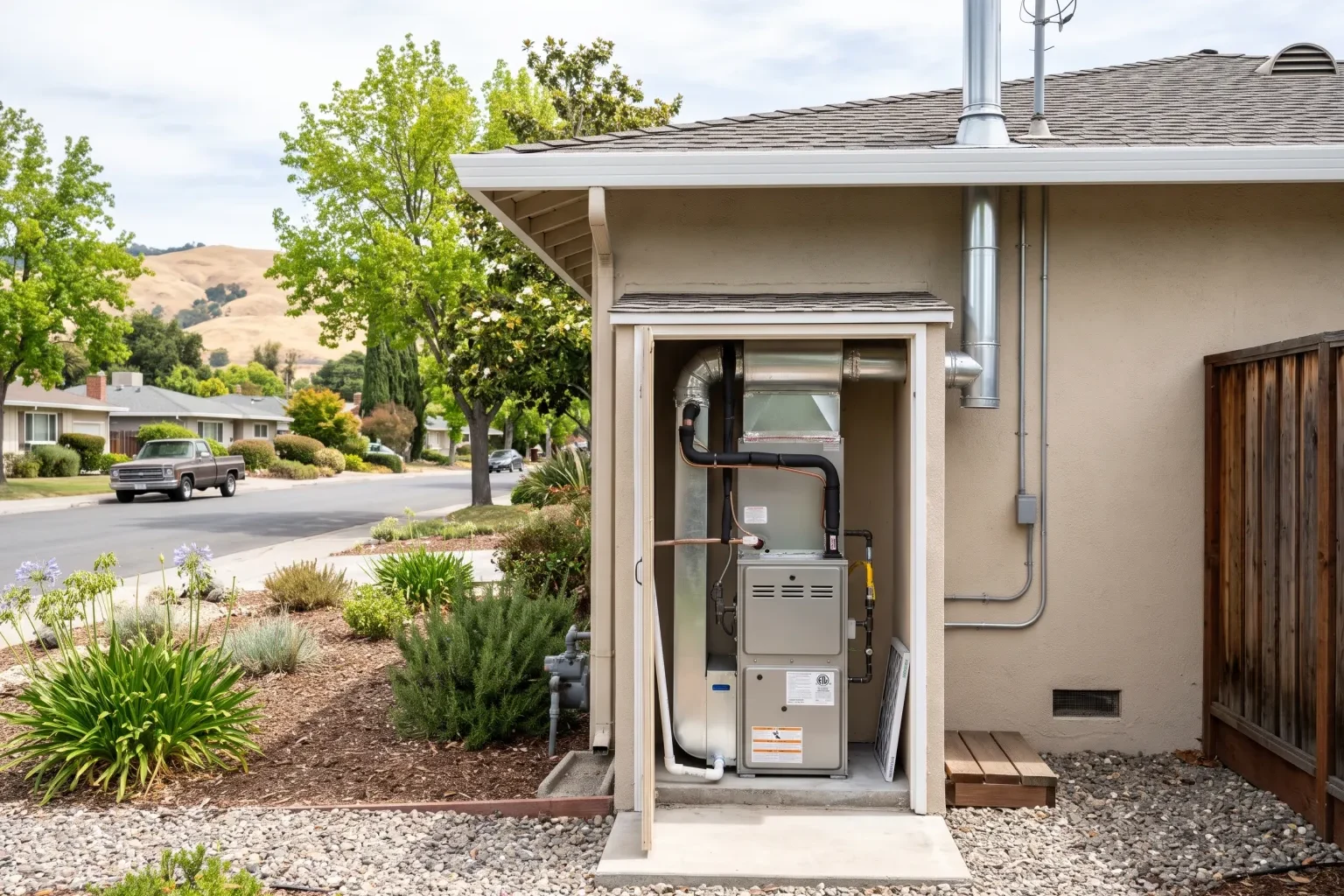
When your furnace or heat pump stops keeping up, a chilly San Mateo night can feel a lot longer. OzoneLine HVAC Services repairs gas furnaces, heat pumps, and wall and floor heaters for homeowners in San Mateo and nearby Peninsula cities. This page covers the warning signs worth acting on, what our technicians check, how we think through repair versus replacement, and what to expect when we come out.
Signs Your Heating System Needs Repair
Heating problems rarely start with a total breakdown. Most systems give some warning first, and catching it early often means a simpler fix.
If you smell gas (a rotten egg odor), leave the house and call your gas utility or 911 from outside before calling anyone else. If a carbon monoxide alarm sounds, get everyone outside first.
- Air from the vents feels lukewarm or cool even with the thermostat turned up
- Some rooms stay cold while others are comfortable
- The system turns on and off in short bursts
- New noises such as banging, squealing, rattling, or grinding
- A burning or dusty smell that lingers well past the first few minutes of the season
- The furnace won't ignite, or the igniter or pilot keeps failing
- Energy bills rising without a change in how you use the heat
- A tripped breaker every time the heater runs
What We Check During a Heating Repair
A good repair starts with finding the cause, not just treating the symptom. Depending on your equipment, our technician will typically check:
We'll explain what we found in plain terms and show you the worn or failed part when we can.
- Thermostat settings, wiring, and batteries
- Air filter condition and airflow through return and supply vents
- Ignition system, flame sensor, and burners on gas furnaces
- Blower motor and capacitor
- Heat exchanger condition and venting, looking for cracks or blockages
- Refrigerant circuit, reversing valve, and defrost controls on heat pumps
- Electrical connections, safety switches, and the control board
- Condensate lines on high-efficiency furnaces
Repair or Replace?
Most heating problems are repairable, and we'll say so when they are. A failed igniter, flame sensor, capacitor, or thermostat is usually a straightforward fix. Replacement starts to make sense when a major component like a heat exchanger or compressor fails on an older system, when repairs are becoming frequent, or when the system can no longer heat your home comfortably.
Local rules are worth knowing, too. Bay Area Air District rules do not require you to replace working equipment; they only come into play when a furnace fails or is replaced. Gas furnaces manufactured from 2029 onward must meet a zero-NOx emission standard, which in practice points homeowners toward heat pumps when a furnace is replaced after that date. If you're weighing a replacement, it's worth factoring in.
On incentives: the federal energy efficient home improvement tax credit covered qualifying heat pumps placed in service before December 31, 2025, and is not available for new installations after that date. BayREN and your local clean energy provider may offer heat pump incentives, but amounts and availability change by funding cycle, so we confirm the current offer before including it in any quote.
What Affects the Cost of Heating Repair
We give you a clear quote before any repair begins. What goes into it depends on:
- The type of system: gas furnace, heat pump, wall heater, or ductless unit
- Which part failed and whether it's a common or brand-specific component
- How easy the equipment is to reach, such as in an attic, crawlspace, or tight closet
- Whether there's a single failure or several related issues
- The age of the system and availability of replacement parts
- Whether the visit is scheduled ahead or needed urgently
How a Heating Repair Visit Works
When you contact us, we'll ask about your system and what you're noticing so the technician arrives prepared. At your home, they'll listen to what's been happening, inspect the equipment, and run the system to confirm the problem.
Next, you get an explanation of the cause and your options, along with a quote before work starts. If you approve, we'll complete the repair, often during the same visit when the part is on hand. Before leaving, the technician runs the system through a full heating cycle and walks you through what was done.